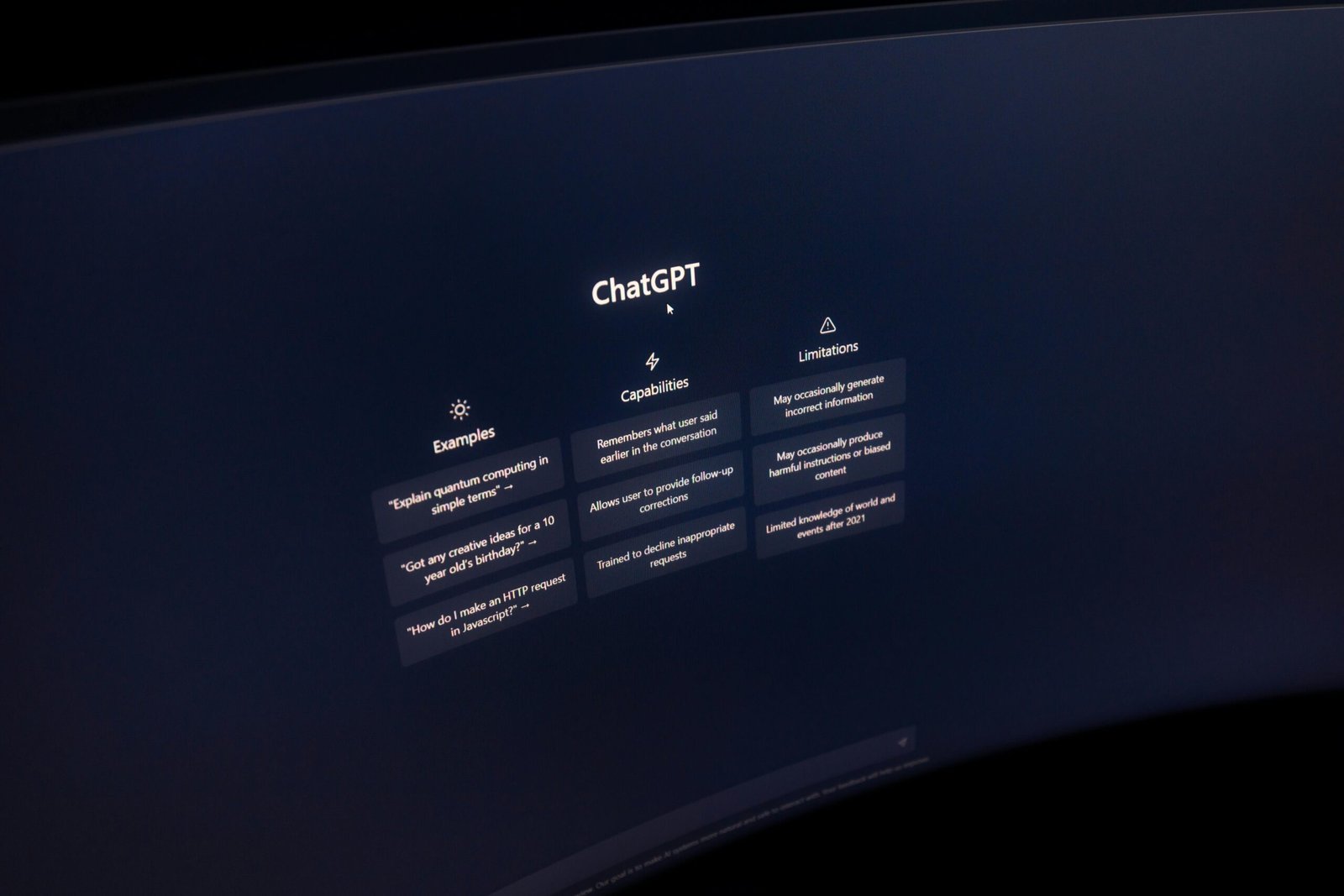
Artificial intelligence (AI) has rapidly become part of everyday life. From smartphones and recommendation systems to writing assistants and image generators, AI is no longer a distant futuristic idea—it’s here and evolving fast. However, as AI adoption grows, so do misunderstandings about what it truly is and what it can (and cannot) do. Many beginners enter the AI world with unrealistic expectations or unnecessary fears, often shaped by movies, headlines, or social media hype. This article explores some of the most common AI myths that beginners still believe and clarifies the reality behind them.
Myth 1: AI Is the Same as Human Intelligence
One of the biggest misconceptions is that AI thinks and understands the world like humans do. Beginners often believe AI has consciousness, emotions, or self-awareness. In reality, AI systems do not “think” or “understand” anything in a human sense. They operate by analyzing data, recognizing patterns, and following mathematical models and algorithms.
AI does not have feelings, intentions, or personal opinions. Even advanced systems that can write stories or hold conversations are simply predicting the most likely next word based on patterns learned from data. They may sound intelligent, but they do not possess true understanding or awareness.

Myth 2: AI Can Work Perfectly Without Human Input
Many beginners assume that AI is fully autonomous and does not need human involvement once it’s created. This is far from the truth. AI systems rely heavily on human-designed rules, training data, testing, and continuous monitoring. Humans decide what data the AI learns from, what goals it should optimize for, and how its outputs are evaluated.
Without human guidance, AI models can produce biased, incorrect, or even harmful results. In most real-world applications, AI works best as a supportive tool that enhances human decision-making rather than replacing it entirely.
Myth 3: AI Will Instantly Replace All Jobs
A common fear among beginners is that AI will eliminate most jobs in the near future. While AI is certainly changing the job market, it is not simply “taking jobs away.” Instead, AI is transforming how work is done. Some tasks become automated, but new roles and opportunities also emerge.
Historically, technological advances have shifted job demands rather than erasing work altogether. AI often handles repetitive or time-consuming tasks, allowing humans to focus on creativity, strategy, and problem-solving. Learning how to work with AI is more valuable than fearing it.
Myth 4: AI Always Gives Correct Answers
Because AI tools can sound confident and fluent, beginners may assume their answers are always accurate. This belief can be risky. AI can make mistakes, generate outdated information, or present false details in a convincing way. It does not truly “know” facts—it predicts responses based on patterns in data.
This is why critical thinking is essential when using AI. Outputs should be verified, especially in areas like medicine, law, education, or finance. AI is a powerful assistant, but it should not be treated as an unquestionable authority.
Myth 5: You Must Be a Programmer to Use AI
Many beginners believe AI is only for developers, engineers, or data scientists. While building AI models requires technical skills, using AI does not. Today, countless AI-powered tools are designed for everyday users, including writers, designers, students, marketers, and business owners.
From voice assistants to image generators and content tools, AI is increasingly accessible. Understanding how to ask the right questions and apply AI outputs effectively is often more important than knowing how to code.
Myth 6: AI Is Completely Neutral and Unbiased
Another widespread myth is that AI is perfectly objective. In reality, AI systems learn from data created by humans, and human data often contains biases. As a result, AI can reflect or even amplify existing social, cultural, or economic biases.
Beginners may assume AI decisions are purely logical, but fairness depends on how the system is trained and evaluated. Responsible AI development requires careful data selection, transparency, and continuous oversight to reduce bias and unintended consequences.
Myth 7: AI Is Too Complex to Learn for Beginners
The term “artificial intelligence” can sound intimidating, leading many beginners to believe it is too complicated to understand. While the underlying mathematics and engineering can be complex, the basic concepts of AI are quite approachable. Ideas such as machine learning and pattern recognition can be explained in simple terms.
With the growing availability of beginner-friendly tutorials, tools, and courses, learning AI fundamentals has never been easier. Starting small and learning gradually can build confidence and practical understanding.
Myth 8: AI Has Its Own Goals and Intentions
Some beginners believe AI can develop its own desires or plans. This idea is often fueled by science fiction movies where machines turn against humans. AI has no goals beyond what humans program it to pursue. It does not “want” anything.
Any harmful behavior from AI systems usually results from poor design, flawed data, or misuse—not from independent intention. Understanding this helps reduce unnecessary fear and encourages responsible use of the technology.
Myth 9: AI Understands Context the Same Way Humans Do
Beginners often think AI truly understands context, meaning, and nuance just like a human reader or listener. While modern AI can handle context better than earlier systems, its understanding is still limited. AI relies on statistical patterns rather than lived experience or real comprehension.
This means AI can misinterpret sarcasm, cultural references, emotional tone, or complex real-world situations. It may respond appropriately in many cases, but that does not mean it genuinely understands the situation the way a human does.
Myth 10: More Data Automatically Means Better AI
Many beginners believe that simply feeding more data into an AI system will always improve its performance. While data is important, quality matters far more than quantity. Poor-quality, biased, or irrelevant data can actually make AI perform worse.
Effective AI systems require carefully selected, cleaned, and balanced data. Without proper structure and evaluation, adding more data can introduce noise, reinforce bias, or lead to inaccurate outputs.
Myth 11: AI Learns on Its Own Without Limits
Some beginners assume AI keeps learning endlessly on its own like a human brain. In reality, most AI models do not continuously learn after deployment unless they are specifically designed and updated to do so. Many systems are trained once and then remain static.
Without updates, retraining, or new data, AI can become outdated. Human intervention is necessary to improve performance, adapt to new information, and correct errors over time.
Myth 12: AI Can Replace Creativity Completely
Because AI can generate art, music, writing, and designs, beginners may think human creativity is no longer needed. However, AI creativity is based on remixing patterns from existing human-created content. It does not originate ideas from personal experience, emotion, or imagination.
Human creativity involves intention, emotion, cultural awareness, and originality. AI can assist and inspire creative work, but it does not replace the human creative process—it complements it.
Myth 13: AI Is Only Useful for Big Companies
Many beginners believe AI is only practical for large corporations with massive budgets. In reality, AI tools are increasingly affordable and accessible to individuals, small businesses, freelancers, and students.
From automating daily tasks to improving productivity and learning, AI offers value at every scale. Even basic tools can save time, reduce effort, and open new opportunities for beginners.

Myth 14: AI Knows What Is Right or Wrong
Another misconception is that AI can independently judge morality or ethics; AI does not have values, morals, or ethical understanding. Any ethical behavior it displays comes from human-defined rules and constraints.
When AI makes questionable decisions, the issue lies in how it was designed, trained, or deployed. Ethical responsibility always belongs to humans, not the machine.
Myth 15: Learning AI Is a One-Time Effort
Beginners sometimes believe that once they learn AI basics, they are done. In reality, AI is a rapidly evolving field. Tools, models, and best practices change frequently.
Staying effective with AI requires continuous learning, experimentation, and adaptation. However, this also means beginners do not need to know everything at once—learning can happen step by step as the technology evolves.
Conclusion
AI is a powerful and transformative technology, but it is often misunderstood—especially by beginners. Believing myths about AI can lead to unrealistic expectations, fear, or misuse. By separating fact from fiction, beginners can approach AI with a clearer mindset and make better use of its capabilities.
The truth is that AI is not magic, not human, and not all-knowing. It is a tool created by humans to assist, automate, and enhance certain tasks. As awareness grows and myths fade, more people can confidently and responsibly benefit from AI in their daily lives and future careers.