
The integration of artificial intelligence (AI) into the workplace is no longer a futuristic concept—it is happening now. From automating repetitive tasks to enabling data-driven decision-making, AI is reshaping the way we work, communicate, and innovate. As organizations increasingly adopt AI technologies, employees, businesses, and society at large are experiencing profound shifts in roles, responsibilities, and workplace dynamics. Understanding the future of work with AI is essential for both businesses aiming to stay competitive and workers preparing for new opportunities.
AI and the changing nature of Jobs
One of the most immediate effects of AI in the workplace is automation. AI-powered systems can handle tasks traditionally performed by humans, such as data entry, scheduling, customer support, and even complex analyses in finance or medicine. While this leads to greater efficiency and accuracy, it also raises concerns about job displacement.
However, AI is not simply eliminating jobs—it is transforming them. Many roles will evolve to focus on tasks that require creativity, empathy, strategic thinking, and problem-solving—areas where humans excel over machines. For example, marketing professionals may increasingly rely on AI to analyze consumer behavior, freeing them to design innovative campaigns rather than spending hours on data compilation. Similarly, doctors may use AI to interpret diagnostic images, allowing them more time for patient care and treatment planning.
The Rise of New Job Roles and Skills
While some jobs will change or decline, AI is also creating new roles that did not exist before. Careers such as AI trainers, data analysts, prompt engineers, machine learning specialists, and AI ethicists are becoming increasingly important. These roles focus on developing, managing, and responsibly deploying AI systems rather than competing with them.
As a result, the skills required for future work are evolving. Technical skills like data literacy, coding, and AI tool proficiency are becoming more valuable. At the same time, human-centered skills—such as creativity, emotional intelligence, critical thinking, and leadership—are gaining importance. In the AI-powered workplace, the most successful professionals will be those who can effectively combine technical knowledge with uniquely human abilities.
AI and Remote Work Transformation
AI is also accelerating the shift toward remote and hybrid work models. Intelligent collaboration tools powered by AI can transcribe meetings, summarize discussions, translate languages in real time, and manage workflows automatically. These capabilities make distributed teams more productive and reduce communication barriers across different time zones and cultures.
Virtual assistants and AI-driven project management platforms help teams stay organized and aligned, even when working remotely. By automating coordination tasks, AI enables employees to focus on meaningful collaboration rather than administrative work. This transformation is redefining the concept of the workplace, making it more flexible, inclusive, and globally connected.
Skills for an AI-Driven Workforce
As AI continues to reshape the job landscape, new skills are becoming essential. Technical skills, such as programming, data analysis, and AI system management, are highly valuable. Equally important are soft skills—critical thinking, creativity, emotional intelligence, and adaptability. The ability to collaborate with AI systems and interpret their outputs will be a defining skill for future professionals.
Lifelong learning will also become a cornerstone of career success. With AI technologies advancing rapidly, workers will need to continuously update their knowledge and skills. Educational institutions and organizations are responding by offering AI-focused training programs, online courses, and reskilling initiatives.
AI in Decision-Making and Productivity
AI is transforming decision-making by providing actionable insights derived from massive datasets. Businesses can now predict market trends, optimize supply chains, and personalize customer experiences with unprecedented accuracy. This data-driven approach allows organizations to make faster, more informed decisions, enhancing productivity and competitiveness.
In addition to decision support, AI is also improving workplace productivity through intelligent automation. Tools like AI-powered virtual assistants, chatbots, and task management systems streamline workflows, reduce repetitive work, and enable employees to focus on higher-value activities. This shift allows businesses to operate more efficiently and employees to engage in more meaningful work.
Ethical Considerations and Human-Centric AI
While AI offers significant benefits, it also raises ethical questions. Issues such as bias in AI algorithms, privacy concerns, and the potential for job inequality must be addressed. Organizations adopting AI must prioritize transparency, fairness, and accountability to ensure that AI enhances work rather than exacerbates existing inequalities.
Human-centric AI—designing AI systems that augment rather than replace human workers—will be key to a positive future of work. This approach emphasizes collaboration between humans and AI, ensuring that technology serves as a tool to enhance human potential rather than diminish it.

The Role of Leadership in AI Adoption
Leaders play a critical role in guiding organizations through AI adoption. Successful AI integration requires not only technological investments but also cultural changes. Leaders must foster an environment of continuous learning, encourage experimentation with AI tools, and support employees in adapting to new ways of working. By promoting a forward-thinking mindset, organizations can harness the full potential of AI while maintaining a motivated and skilled workforce.
Preparing for a Hybrid Future
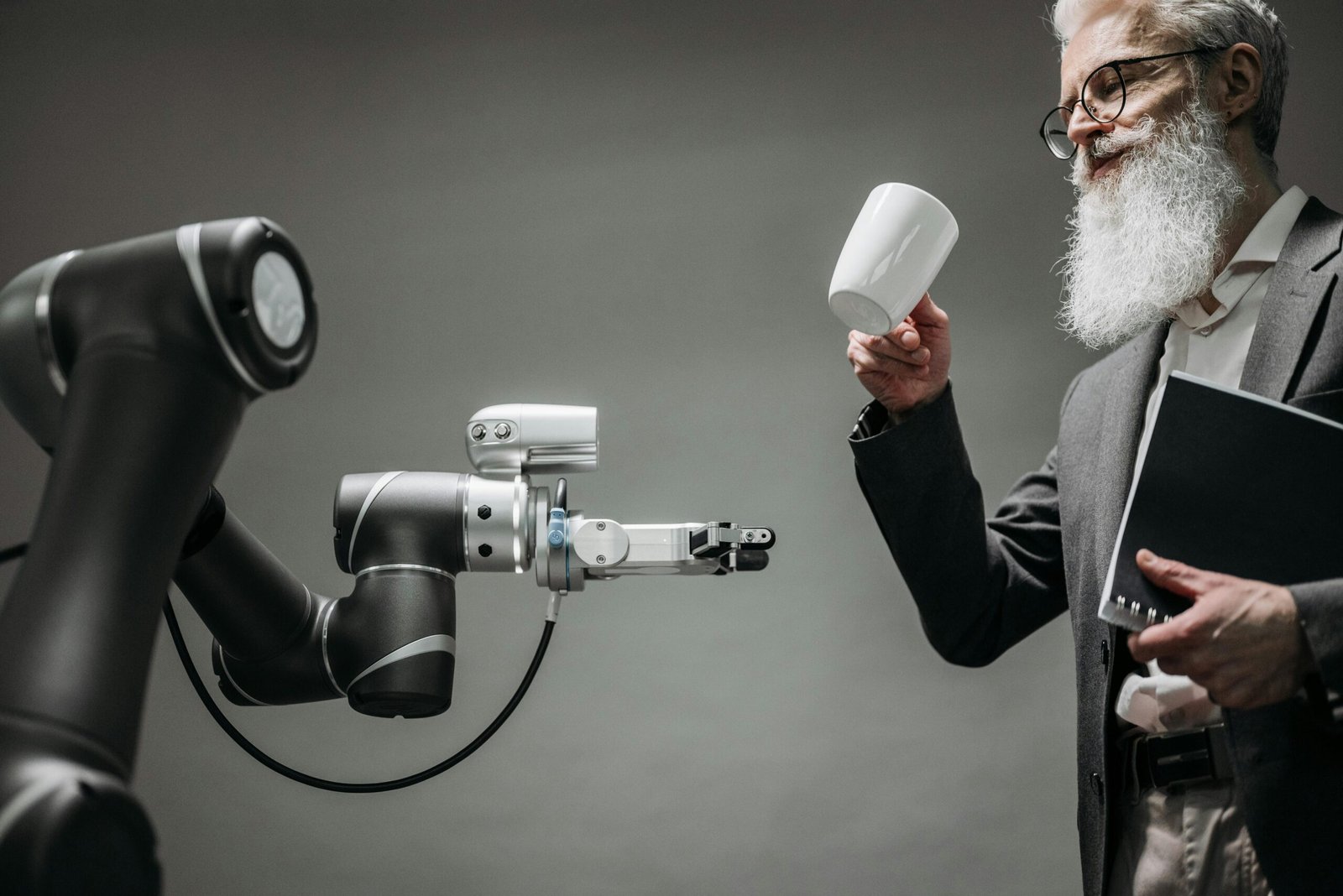
The future of work with AI is likely to be hybrid in nature, where humans and AI systems collaborate seamlessly. Jobs will be augmented rather than fully automated, and the workplace will be characterized by flexibility, remote work, and AI-enhanced tools. Workers who embrace AI as a partner rather than a threat will be well-positioned to thrive in this evolving landscape.
Ultimately, AI is not about replacing humans—it is about empowering them. By leveraging AI responsibly, organizations can unlock creativity, productivity, and innovation, creating a future of work that is more efficient, inclusive, and fulfilling.
Conclusion
The integration of AI into the workplace is transforming the way we live and work. While it presents challenges, such as job displacement and ethical concerns, it also opens up unprecedented opportunities for innovation, skill development, and productivity. By embracing a human-centric approach, investing in continuous learning, and fostering ethical AI practices, society can navigate the future of work with confidence. The rise of AI is not the end of human work—it is the beginning of a new era where humans and machines collaborate to achieve greater possibilities.